
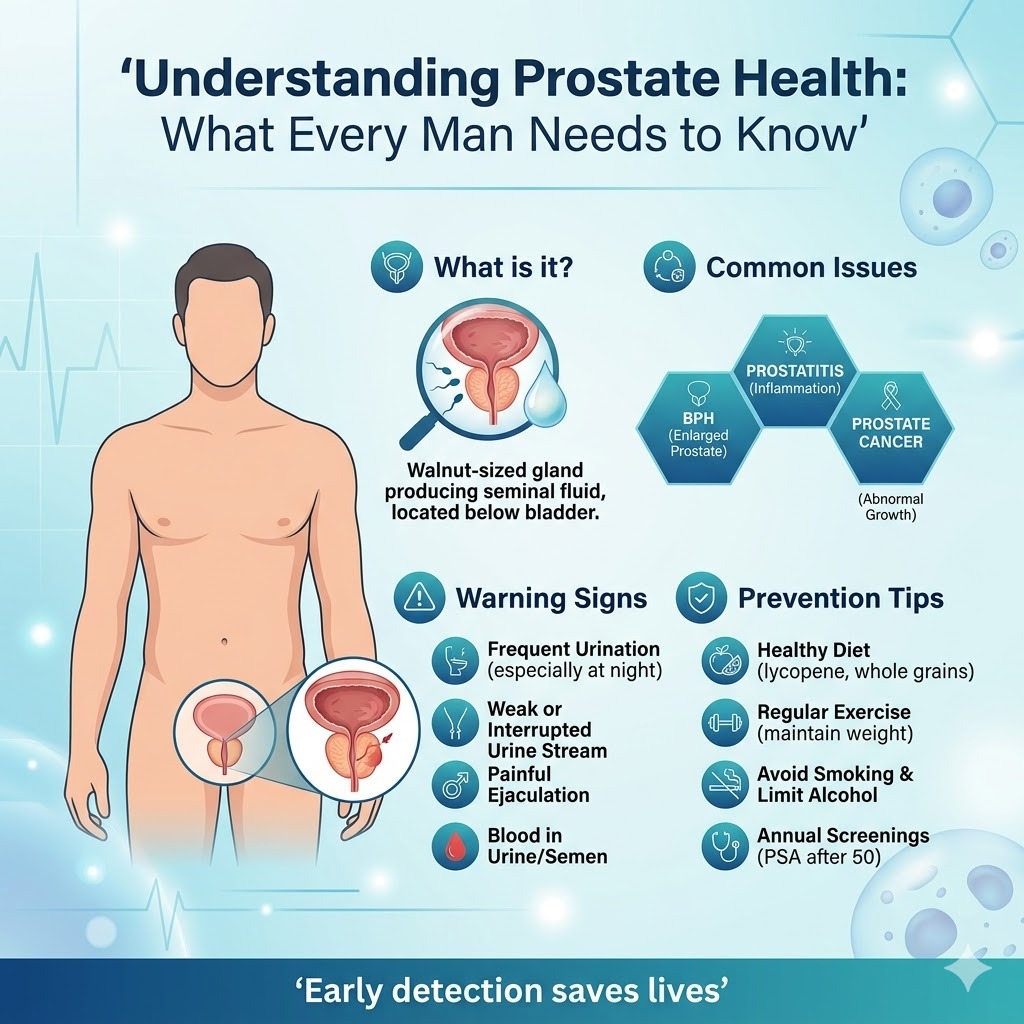
Prostate health is one of the most important—yet often overlooked—aspects of men’s wellbeing. Many men don’t think about it until symptoms appear, but by then, the condition may already be advanced. Understanding how the prostate works, the common problems associated with it, and how to protect it can make a significant difference in long-term health.
What Is the Prostate?
The prostate is a small gland, about the size of a walnut, located just below the bladder. It plays a key role in male reproduction by producing fluid that nourishes and transports sperm.
Because of its position around the urethra (the tube that carries urine), any change in the prostate—such as enlargement—can directly affect urination and sexual function.
Common Prostate Problems
Most men will experience some form of prostate issue during their lifetime. The three major conditions include:
1. Enlarged Prostate (BPH)
Also known as benign prostatic hyperplasia, this is a non-cancerous enlargement of the prostate that commonly occurs with age. It can block urine flow and cause discomfort.
2. Prostatitis
This refers to inflammation of the prostate, often caused by infection. It can lead to pain, difficulty urinating, and flu-like symptoms in some cases.
3. Prostate Cancer
One of the most common cancers in men worldwide, prostate cancer often develops slowly and may not show symptoms early on. Early detection significantly improves treatment outcomes.
Warning Signs You Should Never Ignore
Prostate issues often start subtly. Watch out for these symptoms:
Frequent urination, especially at night
Difficulty starting or stopping urine flow
Weak or interrupted urine stream
Pain or burning during urination
Blood in urine or semen
These symptoms may indicate anything from an enlarged prostate to more serious conditions like cancer, so medical evaluation is essential.
What Causes Prostate Problems?
While the exact causes vary, several risk factors increase the likelihood of prostate issues:
Age: Risk increases significantly after 40–50
Family history: Genetics play a strong role
Hormonal changes: Especially as men age
Lifestyle factors: Obesity, poor diet, and inactivity
Chronic conditions: Diabetes and heart disease can contribute
How to Maintain a Healthy Prostate
The good news is that lifestyle choices can greatly influence prostate health.
🥦 Eat a Balanced Diet
Focus on fruits, vegetables, whole grains, and healthy fats. Foods like tomatoes and broccoli may help support prostate health.
🏃 Stay Physically Active
Regular exercise helps maintain a healthy weight and reduces the risk of prostate problems.
⚖️ Maintain a Healthy Weight
Obesity is linked to a higher risk of prostate enlargement and cancer.
🩺 Get Regular Checkups
Screening becomes increasingly important as you age, especially after 40 or if you have a family history.
Why Early Action Matters
One of the biggest challenges with prostate health is that serious conditions like prostate cancer often show no early symptoms.
By the time symptoms appear, the condition may already be advanced. That’s why prevention, awareness, and early detection are critical.
Supporting Your Prostate Health Naturally
In addition to lifestyle changes, many men turn to supplements to help support prostate function, reduce inflammation, and manage symptoms like frequent urination or enlargement.
One product that has gained attention is Ganacine G7 Prostate Gland Shrinker.
This supplement is designed to:
Support healthy prostate size
Improve urinary flow
Reduce frequent urination (especially at night)
Promote overall prostate wellness
If you’re experiencing early symptoms or simply want to take a proactive approach to your health, incorporating a trusted prostate support supplement like Ganacine G7 alongside a healthy lifestyle may be beneficial.
Final Thoughts
Prostate health is not just an “older man’s issue”—it’s something every man should start paying attention to early. With the right knowledge, lifestyle habits, and support, you can reduce your risk and maintain a better quality of life.
👉 Don’t wait for symptoms to appear. Start taking care of your prostate today.